AI-Powered Legal Case Outcome Prediction Methods
AI-Powered Legal Case Outcome Prediction Methods
Every litigation partner predicts outcomes. They predict how a motion will land in front of a particular judge. They predict how long a case will take to clear summary judgment. They predict whether opposing counsel will push to trial or settle on the eve of it. These predictions drive real decisions about where to file, what to advise the client, and how to staff the matter.
The question is what those predictions are grounded in. Most of the time the answer is some combination of experience, anecdote, and broad statistics about a judge or a venue. Experienced attorneys know that none of these capture the conditions that actually shape how a particular case will move, the judge, the parties, the firms, the venue, and the procedural posture, in combination as they exist in the matter at hand.
This article examines how AI tools, including the work Pre/Dicta does, are changing what those predictive judgments rest on. Not by predicting outcomes for the lawyer, but by surfacing the historically comparable cases that show how courts have actually ruled when the same conditions were present.
Key Takeaways
| Aspect | Details |
|---|---|
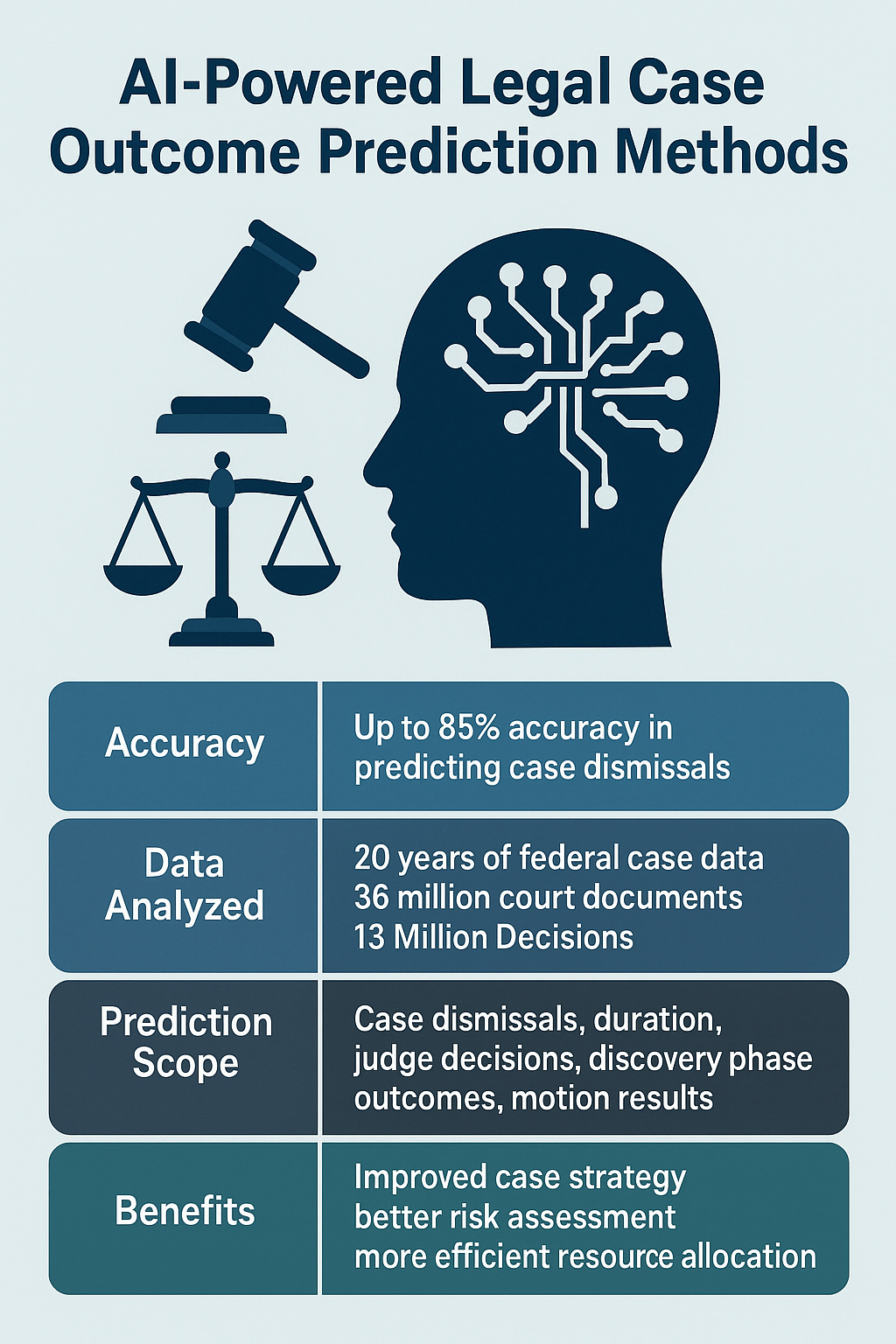
| Pleading-Stage Assessment | ~85% alignment with observed outcomes on motions to dismiss, retrospectively tested against historically comparable cases |
| Data Foundation | 20 years of federal case data, 36 million docket entries, 13 million decisions |
| Scope | Comparable-case context across motion practice, case duration, judicial activity, and discovery patterns |
| Benefits | Better-grounded strategy, sharper risk assessment, more efficient resource allocation |
| Limits | Each case has unique features, the legal landscape evolves, historical data carries its own constraints |
What These Tools Do
AI tools in this category analyze large bodies of historical court data and surface the cases that share the same composition as the matter in front of the attorney. The lawyer is still the one making the predictive call. The tool’s job is to make sure that call is grounded in cases that actually look like the one being litigated, rather than in averages that combine dissimilar matters.
In practice, this means the tools support attorneys who are:
- Assessing the likelihood that a case will clear the pleading stage and proceed into discovery
- Estimating how long a comparable matter has typically taken to resolve
- Reading how a particular judge has ruled on similar motions in similar configurations
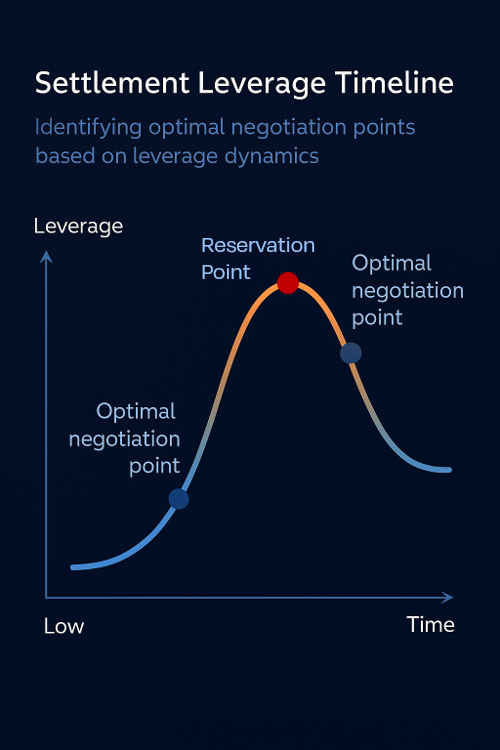
- Considering settlement timing and ranges
- Evaluating which arguments have historically landed in the relevant venue
Pre/Dicta is one of the platforms working in this space.
How Accurate Are These Predictions?
The accuracy of an attorney’s predictive judgment depends heavily on what it is grounded in. When the underlying material is a set of cases that genuinely match the composition of the matter at hand, the predictive judgment gets sharper.
There is one stage of litigation where the platform itself produces a directional read rather than supporting the attorney’s judgment: the motion to dismiss. The pleading-stage question is unusually stable, namely whether comparable cases have cleared the threshold and proceeded into discovery. On motions to dismiss specifically, Pre/Dicta’s pleading-stage assessment shows roughly 85% alignment with observed outcomes when retrospectively tested against historically comparable cases.
Outside the pleading stage, the platform does not produce a directional output. It surfaces comparable cases and how they have been decided, and the attorney does the work of forming a view from that material.
How Do These Tools Work?
These tools draw on large bodies of structured litigation history. Pre/Dicta’s foundation includes:
- 20 years of federal case data
- 36 million docket entries
- 10 million parties and law firms
- 13 million motions
- 10,000 judges, with their decision history in like matters
Each matter in this corpus is decomposed into its judicial, party, legal, and procedural components. Those dimensions, not keyword searches against opinion text, determine which historical cases are surfaced when an attorney brings a new matter to the platform. The result is a set of cases that share the same compositional structure as the one in front of the attorney.
This is a different kind of activity than running queries in Westlaw or Lexis. Keyword research surfaces authority on a legal question. Compositional matching surfaces the prior matters that share the same conditions as the case being litigated. Both have a place in how attorneys prepare a matter.
What These Tools Show Across the Litigation Lifecycle
Attorneys make predictive judgments at every stage of litigation. These tools surface different kinds of context depending on where in the lifecycle the matter sits.
Pre-Discovery
At the pre-discovery stage, attorneys are predicting whether the case will clear the pleading threshold and proceed into discovery. Pre/Dicta supports that judgment in two ways. The pleading-stage assessment, described above, produces a directional read on motion to dismiss outcomes. Beyond that, the platform surfaces:
- How comparable cases have moved past the pleading stage
- How often plaintiffs have voluntarily dismissed at this point
- How comparable matters have proceeded into discovery and on what timelines
Discovery
During discovery, attorneys are predicting whether the case will resolve at summary judgment, whether settlement is likely and on what terms, and how long the discovery process itself will take. The tools surface:
- How comparable cases have resolved at summary judgment
- Settlement patterns observed across discovery in matters with similar composition
- The typical scope and duration of discovery in comparable matters
Trial
As a case approaches trial, attorneys are predicting eve-of-trial settlement, trial timelines, and post-trial exposure. The tools surface:
- How comparable matters have resolved on the eve of trial
- Observed timelines to trial outcomes
- How comparable cases have moved through post-trial motions and appeals
The point across all three stages is the same. The attorney is the one predicting. The tool is the source of the comparable-case material the prediction rests on.
How These Tools Identify Comparable Cases
The most useful feature of these tools is their ability to surface cases that genuinely share the composition of the matter at hand. Rather than running keyword searches against a body of opinions, the system decomposes each matter into its judicial, party, legal, and procedural components, and uses those dimensions to identify historically comparable cases.
The composition includes:
- Judicial background, experience, and decision history in like matters
- Party characteristics and counsel configuration
- Claims and legal theory
- Venue and procedural posture
These are the conditions experienced litigators already know shape outcomes. The platform’s role is to isolate the cases where the same conditions were present and present them as the evidentiary foundation the attorney can reason from. Every underlying case is visible, inspectable, and verifiable.
Why Are These Tools Helpful?
When an attorney’s predictive judgment is grounded in cases that genuinely match the matter at hand, the downstream effects show up across the practice:
- Better-grounded strategy. Attorneys can anticipate challenges, prepare counter-arguments, and allocate resources based on how comparable matters have actually moved
- Sharper risk assessment. Clients gain a clearer picture of the risks and possible outcomes associated with their matters, which supports more informed decisions about litigation, settlement, or alternative dispute resolution
- More efficient resource allocation. Firms can distribute time, personnel, and budget guided by how comparable matters have typically progressed
- Earlier resolution where appropriate. Realistic assessments grounded in comparable-case data can encourage settlement in matters where prolonged litigation is unlikely to produce positive results
- More credible client communication. Attorneys can set realistic expectations about case progress, timelines, and costs, which strengthens client relationships
- Sharper settlement negotiations. Predictive judgments grounded in comparable cases lead to clearer expectations going into settlement talks
These tools support a more grounded approach to litigation strategy, working alongside the professional judgment that has always carried the practice.
What Are the Challenges with These Tools?
These tools have real value but they also have real limits. Recognizing those limits is part of using them well.
- Case uniqueness. Every matter has features that may not be fully captured by historical data. The historical record reflects patterns in past cases, which may not capture the specific circumstances of an individual matter. This is part of why the attorney’s judgment remains central
- An evolving legal landscape. Laws, regulations, and judicial interpretations change over time. The historical record is not always immediately current, particularly in rapidly changing areas of law
- The complexity of legal reasoning. These tools surface comparable cases. They do not capture every nuance of judicial reasoning, particularly in matters involving novel legal questions or overlapping areas of law
- Data constraints. The historical record reflects what has been litigated and how it has been decided. It carries its own constraints, and attorneys using these tools should understand what those constraints are
- Data privacy and security. These platforms work with large amounts of legal data, including sensitive material. Maintaining the security and privacy of that data is a real operational concern
- Integration with existing practice. Bringing these tools into established workflows requires changes in process, additional training, and adjustments in firm culture
Understanding these limits helps attorneys use these tools responsibly, combining the comparable-case material the platform surfaces with the professional judgment that carries the matter.
What’s Next for These Tools
The category continues to develop in a few directions:
- Coverage of additional motion types and procedural postures
- Tighter integration with case management, billing, and other systems attorneys already work in
- More current historical records, with shorter lag between new decisions and their availability in the underlying corpus
- Broader jurisdictional coverage over time
- Stronger ethical frameworks around bias and transparency in how comparable cases are surfaced
These developments suggest that comparable-case analysis will continue to play an expanding role in how attorneys prepare matters, supporting traditional research and the predictive judgment that has always been central to the practice.
Conclusion
Litigation has always involved predictive judgment. Attorneys have always read judges, weighed venues, and assessed how matters are likely to move. What is new is the ability to ground those predictive judgments in cases that genuinely share the composition of the matter at hand, rather than in broad averages or anecdote.
AI tools in this category, including Pre/Dicta, support that work by surfacing historically comparable cases and showing how courts have actually ruled when the same conditions were present. The attorney’s judgment remains where it has always been. The material that judgment rests on gets sharper.
These tools are not perfect. Each case has unique features, the legal landscape evolves, and the historical record has its own limits. But for attorneys who treat comparable-case analysis as a routine part of how they prepare a matter, the work gets more grounded, the conversations with clients get more credible, and the predictions that drive real litigation decisions rest on something more substantial than averages.
Disclaimer: This content is informational and is not a substitute for professional legal advice. The historical patterns and case data referenced are drawn from historical records.